
"Scientific name"
1000 article(s) found

Chinese Coffee Development Agricultural Research Institutes promote Chinese Coffee
At this point, the author's mood is agitated and dignified. Today, when Chinese coffee, especially Yunnan small-grain coffee, has developed to large-scale industrialization through the persistent cultivation of several generations of Chinese mainland and after several ups and downs, it is not easy to be rated as a first-class product by the International Coffee Organization (ICO). The author believes that Yunnan small-grain coffee can quickly rise in Chinese mainland and China's agricultural scientific research.

Patented coffee roasting technology increases the content of polyphenols in roasted coffee beans
The technology includes two processing steps: the first step is to use water extraction technology to extract and dissolve the polyphenols in raw coffee beans, and the second step is to roast the coffee beans with excessive polyphenols in almost vacuum. Spray high concentration of polyphenols aqueous solution before ending baking, thus greatly increasing the polyphenols in roasted coffee beans.

Brief introduction of Coffee Flavor description method for Panamanian Hartman Honey
The family business has a state cup testing laboratory and a sample baking room. Rigorous cup test of each batch of coffee fruit. This ensures that the coffee quality at Hartman Manor is stable and is always looking for progress. Their scientific attitude towards coffee and nearly 100 years of family experience ensure their excellent production. Hartman's story, like its coffee, is legendary.

What are the "round holes" in the bag of baked coffee powder for? (cold knowledge)
Wen / Ziquan, as a newcomer who is addicted to coffee, I recently bought a batch of roasted coffee beans. It is found that there will be a hard, round part with small holes on almost all the packages. Is the breathable hole for me to smell the coffee? The scientific name of the small hole is the one-way valve. To put it more popularly, this air valve is only out and not in. What it does:

Arabica beans turned out to be small fruit coffee? Arabica Coffee and Arabica Coffee
Professional coffee knowledge exchange More coffee bean information Please pay attention to coffee workshop (Weixin Official Accounts cafe_style) Small fruit coffee (scientific name: Coffea arabica), also known as Arabic coffee, Arabica coffee, is a species of Rubiaceae coffee genus, is the most traditional coffee variety. Originated in East Africa, coffee was monopolized by the Arab world for a long time before the 15th century AD

Does Robusta Robusta belong to boutique coffee? are Robusta coffee beans good?
Professional coffee knowledge exchange more coffee bean information please follow the coffee workshop (Wechat official account cafe_style) what do you think of Robusta coffee beans? High caffeine and high chlorogenic acid taste terrible? Medicine, rubber, bitterness, leather, miscellaneous sensation, etc. The robusta coffee bean comes from a mutant of the Congolese species (scientific name: Coffee Canephora).

What are the characteristics of Arabica coffee beans _ how to identify Arabica coffee _ arabica coffee
Professional coffee knowledge exchange more coffee bean information please follow the coffee workshop (Wechat official account cafe_style) Arabica coffee bean species (scientific name CoffeeArabica). The origin of Arabica species is the Abyssinia Plateau of Ethiopia (that is, Ethiopia). In the early days, it was mainly used as medicine for food, and was cultivated in the 13th century.

The History of Coffee introduction and expansion in China in the early stage (2)
1. The presentation of the respective expressions and questions of Zhu Kula Coffee 1.1 I remember that it was still the spring of 1995, when Professor Mao Genhai of the former South China Hot farming Academy and I visited Xishuangbanna, Yunnan Province. I had the honor to see the review and prospect of Yunnan coffee development published in the third issue of Tropical crop Science and Technology in 1994 by Huang Junxiong and Zhang Xingcan, Institute of Tropical and Subtropical Economic crops, Yunnan Academy of Agricultural Sciences

Small fruit coffee small coffee is Arabica Arabica coffee beans? How much is the arabica coffee?
Professional coffee knowledge exchange more coffee bean information please pay attention to coffee workshop (Wechat official account cafe_style) small fruit coffee (scientific name: Coffea arabica), also known as Arabica coffee, Arabica coffee, is a species of Rubiaceae coffee, is the most traditional variety of coffee. Originally from East Africa, coffee was monopolized by the Arab world for a long time before the 15th century
Patented coffee roasting technology increases the content of polyphenols in roasted coffee beans
According to foreign reports: applied Food Science Company (Applied Food Science Inc.) A patent has been obtained that can greatly increase the content of polyphenols in roasted coffee beans. The technology includes two processing steps: the first step is to extract and dissolve the polyphenols from raw coffee beans by water extraction technology, and the second step is to combine the extracted polyphenols.

Taste and Flavor description of Honduran Coffee beans introduction to the producing areas of Grinding scale varieties
Taste and Flavor description of Honduran Coffee beans Grinding Calibration Variety producing areas introduce the Honduran national flower carnation (Carnation family), carnation (scientific name: Dianthus caryophyllus) is carnation, also known as lion head carnation, musk carnation, carnation, Dutch carnation. It belongs to Caryophyllaceae and Dianthus, distributed in temperate zone of Europe and Chinese mainland in Fujian, Hubei and other places.

The introduction of a professional barista must be seen by a novice.
Following Cafe Review (Wechat official account vdailycom) found that Beautiful Cafe opened a small shop of its own, the current situation of the barista industry 1, Industry Analysis since Venice opened the first coffee shop in the world in 1645, the coffee industry has rapidly spread to Europe and the world, coffee has become a necessity in people's lives. Coffee is one of the three major drinks in the world.

Description of taste and flavor of Honduran coffee beans introduction to grinding scale of variety characteristics
Description of taste and flavor of Honduran coffee beans: grinding scale introduction of Honduran national flower carnation (Carnation family), carnation (scientific name: Dianthus caryophyllus) is carnation, also known as lion head carnation, musk carnation, carnation, Dutch carnation. Belongs to Caryophyllaceae and Dianthus, distributed in temperate zone of Europe and Chinese mainland in Fujian, Hubei and other places.

Quick look! The most scientific guide to the purchase and preservation of coffee beans
Still buying ground coffee powder? Are you scared when you see the coffee beans on the shelf? I can't drink it all at once when I buy it home. How can I keep it? Drink good coffee, start with buying and using beans! The purchase and storage of coffee beans has always been a difficult task to explain clearly in words, but try to explain it to you today: 1. What should be paid attention to when buying coffee and ripe beans

Description of Coffee Flavor of Hartmann Manor in Panama introduction to the characteristics of manor varieties in producing areas
Hartman Manor in Panama introduces Mr. Louis Hartman who lives in Volcan, La Silla de Pando and Santa Clara3 and grows coffee everywhere. He named his first coffee farm Tizingal which means my star. In addition to coffee, Mr. Hartmond is extremely keen on the exploration of monuments all his life, based on his study of Panamanian archaeology.

The solarization time and mode of honey treatment determine the difficulties in the process of grading honey treatment.
Professional coffee knowledge exchange more coffee bean information please follow the coffee workshop (Wechat official account cafe_style) pulp treatment refers to what honey treatment changed the raw bean treatment which step honey treatment method: what is honey treatment: according to its original meaning, its scientific name should be pulp natural, which is the same as the traditional wet treatment, it removes the thick peel of coffee cherries

The respective expressions and questions of the introduction years of Zhukula Coffee in Chinese Coffee Culture
1.1 I remember that it was still the spring of 1995, when Professor Mao Genhai of the former South China Hot farming Academy and I went to Xishuangbanna, Yunnan Province. I had the honor to see Huang Junxiong and Zhang Xingcan, Institute of Tropical and Subtropical Coffee, Yunnan Academy of Agricultural Sciences, published a paper on the development of Yunnan coffee in 1994 in the third issue of Tropical crop Science and Technology, from which we got the information about the earliest introduction of Yunnan coffee.
History of Coffee planting in the early stage of Coffee introduction and expansion in China (2)
1. The presentation of the respective expressions and questions of Zhu Kula Coffee 1.1 I remember that it was still the spring of 1995, when Professor Mao Genhai of the former South China Hot farming Academy and I visited Xishuangbanna, Yunnan Province. I had the honor to see the review and prospect of Yunnan coffee development published in the third issue of Tropical crop Science and Technology in 1994 by Huang Junxiong and Zhang Xingcan, Institute of Tropical and Subtropical Economic crops, Yunnan Academy of Agricultural Sciences

Patent technology to increase the content of polyphenols in roasted coffee beans how to process coffee beans correctly
The technology includes two processing steps: the first step is to use water extraction technology to extract and dissolve the polyphenols in raw coffee beans, and the second step is to roast the coffee beans with excessive polyphenols in almost vacuum. Spray high concentration of polyphenols aqueous solution before ending baking, thus greatly increasing the polyphenols in roasted coffee beans.
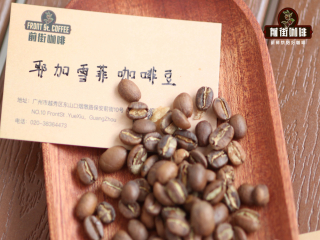
Introduction to the origin of Arabica coffee beans introduction to Arabica Coffee Manor
Arabica coffee accounts for 75%, 80%, and its excellent flavor and aroma make it the only coffee that can be drunk directly among these native species. But its resistance to dryness, frost, diseases and insect pests is low, especially the natural enemy of coffee leaf rust, so the producing countries are committed to variety improvement. Sley.